What I did for summer vacation? An Ayahuasca retreat, of course!
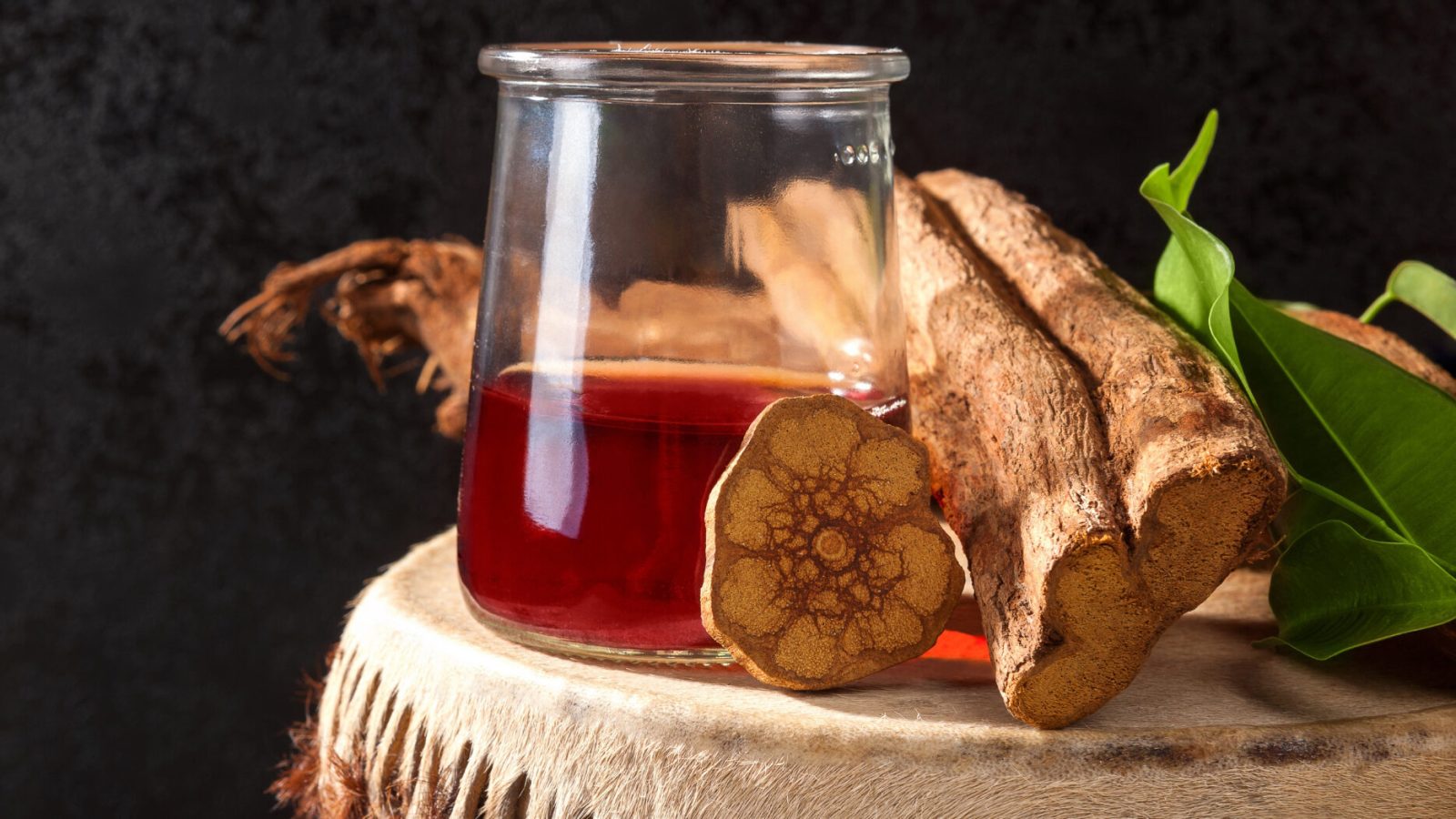
In August, I found myself in a candlelit temple, sitting cross-legged on a mat, waiting to receive a small cup of bitter Ayahuasca brew. The air was heavy with anticipation; every sound – the creak of floorboards, the quiet shifting of bodies – seemed amplified.
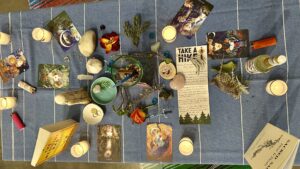
The Colombian shaman stood at the front, behind an altar lined with small bottles and floral sprays. Then he spoke four words:
Don’t believe your thoughts.
Simple – and completely disarming.
Don’t believe your thoughts. What? I have so many. Good ones, too!
This was the second of two all-night Ayahuasca ceremonies. After the first night’s ceremony, I had already compiled a neat list of “opportunities for development.” That’s coach-speak for what’s wrong and needs fixing. Objectively speaking, of course 😊. I thought I knew exactly how to fix this Ayahuasca retreat.
You see…I often see the crack before I see the vase.
Five objects on a table, seemingly identical – and my gaze darts to the one a shade too dark, a fraction too small, a whisper out of line.
It’s not a skill I cultivated; it’s in my blood. In my family of origin, every sermon, performance, or class was followed by a ritual autopsy. The flaws went first under the knife. The beauty, the brilliance, the parts worth celebrating – they sometimes arrived later (not always) as an afterthought, like a P.S.
Some call it critical thinking. Others dress it up as discernment. But for me, it’s a reflex, not a choice.
I’ve been working on letting the good rush in first. To place my inner critic on mute – if only for a moment – and see what happens when praise takes the opening act.
But, I’m still a major work-in-progress.
As the second ceremony unfolded, the shaman’s simple message loosened the grip of my certainties, making me question how much my “objectivity” was just another story I’d been telling myself.
Take the purge, for example. I’d arrived with a low-level dread of Ayahuasca’s infamous purging, imagining it as a miserable bout of stomach sickness. And when it came during the first ceremony – primal and dramatic – my mind went straight to judgment: Why isn’t anyone comforting me? This retreat needs more facilitators.
Then there was the group size. I’d believed that eight to fifteen participants were ideal for a ceremony like this, and here we were forty strangers, mats pressed together along the temple walls. My first thought? This is way too big for any real connection.
But somewhere between the intensity of the ceremony, the cleansing smoke and the flicker of candlelight, the edge of those judgments blurred.
What I had braced for as sickness revealed itself instead as release— my body’s way of clearing space for something higher to enter. The purge wasn’t punishment; it was preparation.
And the crowded room I deemed “too big for connection” taught me something else. I had arrived believing we build community with chatter and hugs. But in the temple, the rules were different: no words, no touch. And yet, the place was alive with communion. The air pulsed with the sounds of rattles and harmonicas. Bare feet stamped in unison, sending vibrations through the floor. Dancers spun in wide, white skirts. Each sound, each movement, wove a quiet web of belonging.
I watched my conclusions dissolve in real time. That was the work: noticing the thought, loosening my grip, letting something truer take its place.
By dawn, I saw how many of my “facts” were just my stories – stories that could be rewritten.
I still see the crack. But now, sometimes, I see the vase first.